SECONDARY STAGE
CURRICULUM
Academic Excellence. Independent Thinking.
The curriculum for Classes IX and X builds on the conceptual foundations established in the earlier years and prepares students for the academic demands of the CBSE Secondary School Examination.
Students engage with English, Mathematics, Science, Social Science, the prescribed second language, Computer Education and other subjects and activities offered by the school. Learning experiences are designed to develop subject knowledge, analytical ability, problem-solving skills and the confidence to apply concepts in unfamiliar situations.
Our teaching-learning approach emphasises:
- Conceptual Clarity: Building a strong understanding of fundamental principles and their practical applications.
- Inquiry and Exploration: Encouraging students to ask questions, investigate ideas and develop evidence-based conclusions.
- Experiential Learning: Connecting theoretical knowledge with laboratory work, projects, demonstrations and real-world contexts.
- Critical and Creative Thinking: Developing the ability to evaluate information, recognise patterns, consider different perspectives and generate solutions.
- Collaborative Learning: Strengthening communication, teamwork and shared responsibility through group activities and discussions.
- Independent Learning: Encouraging effective note-making, reflection, research and organised study habits.
- Technology-Enabled Education: Using appropriate digital resources to enrich understanding and support independent exploration.
- Holistic Development: Integrating physical education, creative pursuits, life skills and values into the educational experience.
Teachers use interactive discussions, visual learning tools, practical investigations, concept maps, presentations, debates, projects and other participatory methods to make learning engaging and purposeful.
The aim is to prepare students not merely for examinations, but for the opportunities and responsibilities that lie beyond school.
LANGUAGES
Finding a Voice. Broadening Perspectives.
Language is central to learning, communication and cultural understanding. At Sri KK Education Centre, English serves as the medium of instruction and the first language.
For Classes IX and X, students study Hindi or Kannada as their second language, according to the school's language offerings and applicable CBSE requirements. Third-language learning is part of the earlier school years through Class VIII, in accordance with the school's language policy.
Our language programme develops proficiency in reading, writing, listening and speaking, while encouraging students to engage thoughtfully with literature, ideas and different forms of communication.
Learning experiences include literary analysis, creative writing, debates, declamation, speeches, group discussions, presentations, interviews, role-play and language-based projects.
These activities nurture vocabulary, comprehension, expression and confidence. They also encourage students to communicate with clarity, appreciate diverse perspectives and become articulate, reflective learners.
ASSESSMENT
Understanding Learning. Inspiring Improvement.
Assessment at Sri KK Education Centre is designed to provide a meaningful picture of each student's progress. It helps teachers understand learning needs, identify areas for improvement and guide students towards greater academic independence.
In keeping with CBSE's emphasis on competency-based learning, assessment focuses on conceptual understanding, application, reasoning, analytical thinking and the ability to use knowledge effectively.
Periodic Assessments
Regular assessments help students consolidate concepts; practise applying their learning and identify areas that require further attention. Feedback guides improvement and supports focused revision.
Multiple Assessment Methods
Quizzes, presentations, debates, projects, practical tasks, group discussions, art-integrated assignments and other appropriate activities provide opportunities to demonstrate understanding in different ways.
Classwork and Independent Assignments
Purposeful classwork and homework reinforce classroom learning, encourage consistent study habits and develop responsibility for individual progress.
Practical and Project-Based Learning
Laboratory work, investigations and subject-based projects help students connect theoretical understanding with practical application. They also encourage observation, organisation, interpretation and problem-solving.
Term-End Assessments
Term-end examinations help evaluate students' understanding across a broader portion of the syllabus. They also provide opportunities to develop effective revision strategies, time management and examination readiness.
Portfolio and Reflection
Where incorporated into the school's assessment plan, portfolios help students review their work, recognise progress and reflect on areas for development. This encourages self-assessment, accountability and a more conscious approach to learning.
Assessment is accompanied by constructive feedback and appropriate academic support, helping students build confidence, strengthen understanding and approach challenges with greater independence.
Learning Avenue's
Spaces That Extend Learning.
Library and Research
A well-resourced library opens doors to literature, scientific discoveries, historical perspectives and new areas of inquiry. At Sri KK Education Centre, the library supports curriculum learning while encouraging students to explore subjects beyond prescribed textbooks.
The collection includes academic and general-interest reading materials, fiction, non-fiction, reference books, dictionaries, encyclopaedias, journals, periodicals, newspapers and magazines, subject to current availability.
Students are encouraged to develop regular reading habits, conduct research, explore unfamiliar ideas and evaluate information thoughtfully. The library also supports teachers in planning lessons and enriching classroom experiences.
Reading initiatives and book fairs, where organised, provide further opportunities to discover authors, genres and ideas.
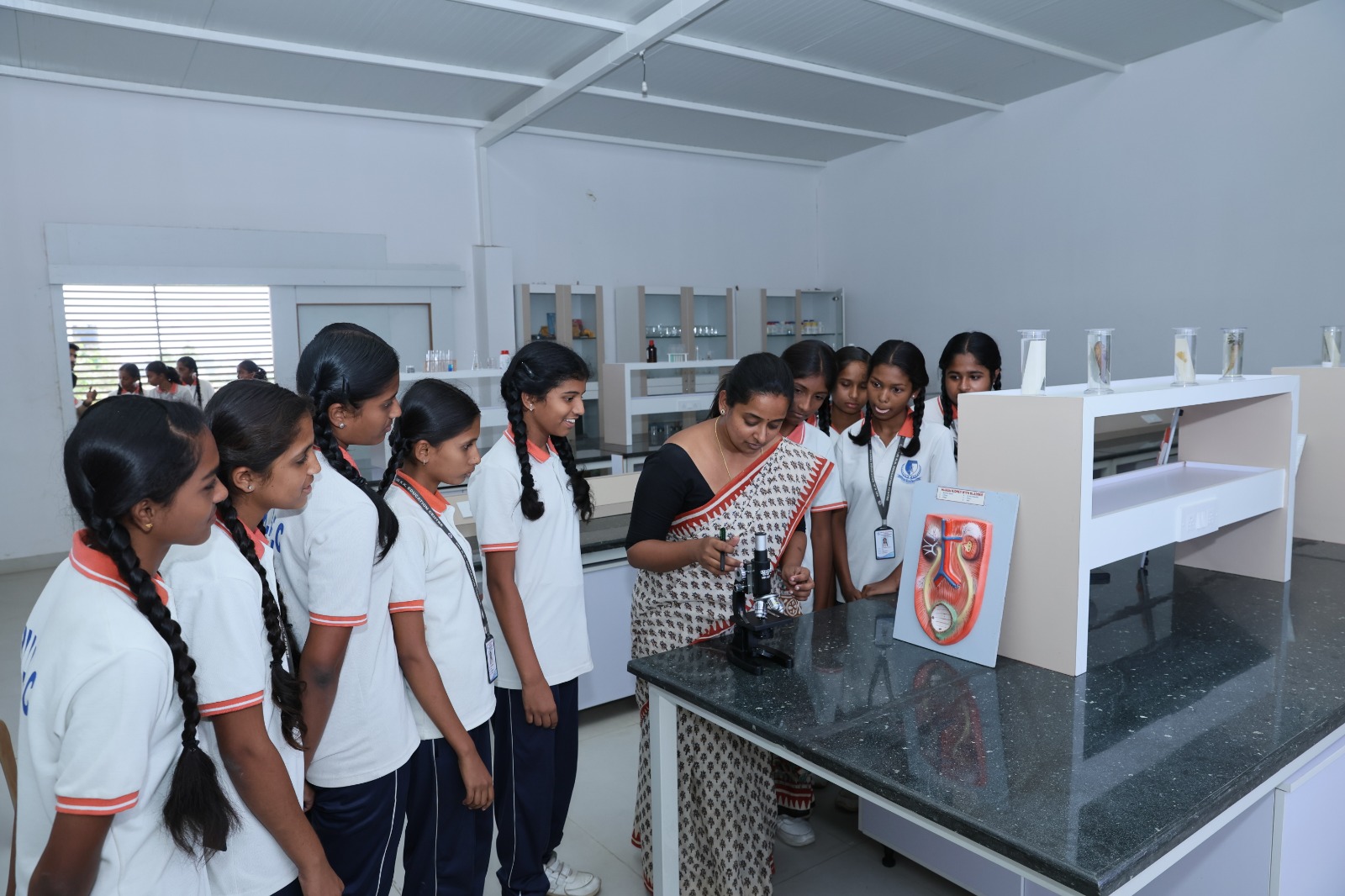
Science Laboratories
Practical investigation is an essential part of scientific learning. Laboratory experiences help students observe phenomena, test ideas, interpret results and understand the principles underlying scientific concepts.
Through appropriate experiments and guided investigations in Physics, Chemistry and Biology, students develop scientific reasoning, accuracy, curiosity and respect for evidence.
Laboratory work also reinforces the importance of safety, careful observation, systematic recording and responsible handling of equipment.
Mathematics Laboratory
The Mathematics Laboratory provides opportunities to explore mathematical concepts through models, demonstrations and practical activities. Students investigate relationships, visualise abstract ideas and connect mathematical principles with real-life situations.
Activities involving algebra, geometry, mensuration and other areas of the curriculum help develop logical reasoning, analytical thinking and problem-solving skills.
Learning through exploration encourages students to approach Mathematics with confidence and recognise its relevance beyond the classroom.
Information and Communication Technology
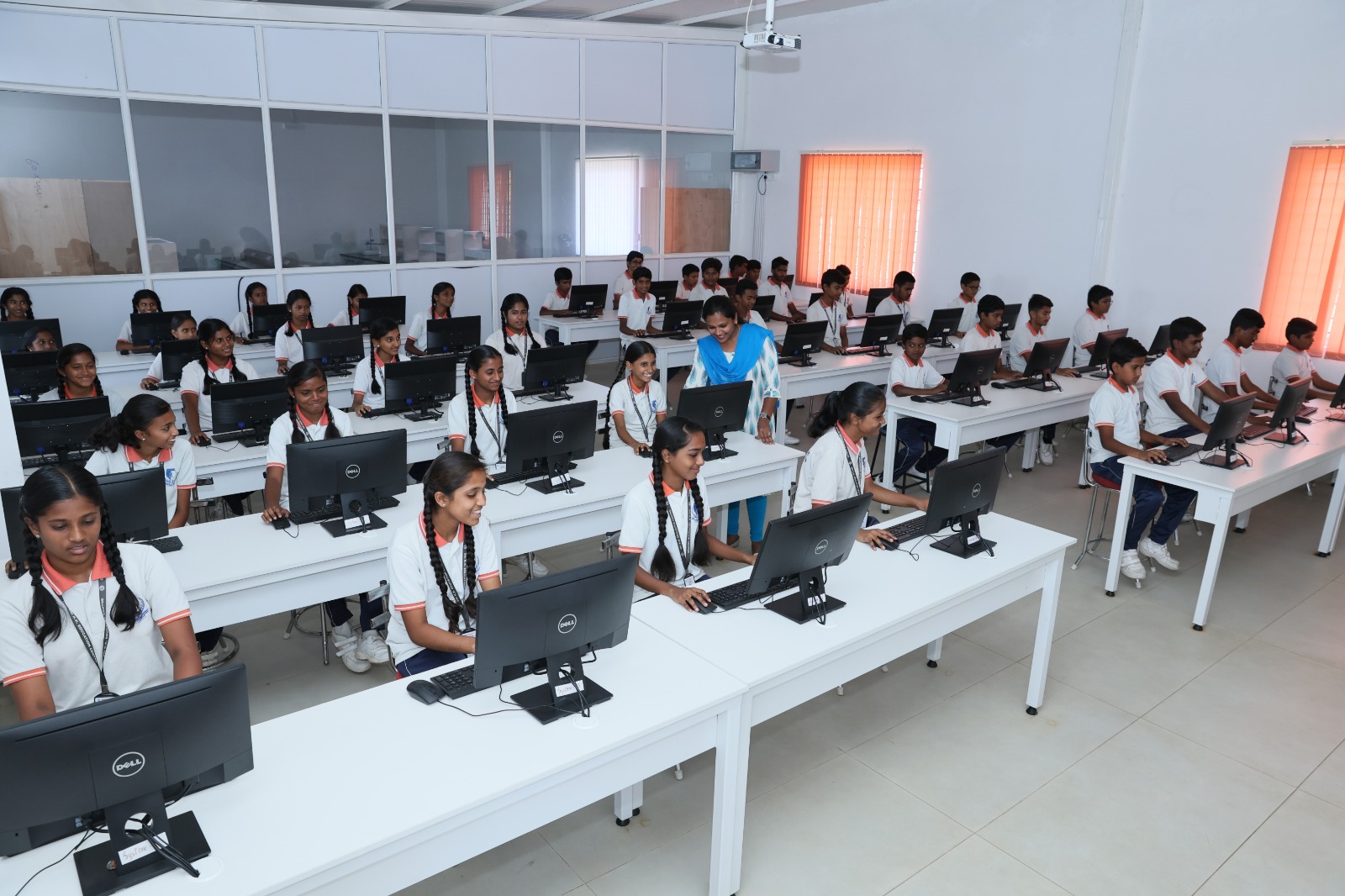
Digital literacy is an important component of contemporary education. Technology-supported learning helps students develop research skills, organise information, communicate effectively and explore creative solutions to problems.
Through curriculum-related digital activities, students are encouraged to use technology purposefully and responsibly. Attention is also given to digital citizenship, online safety, information evaluation and the ethical use of digital resources.
Life Skills Education
Education becomes meaningful when knowledge is accompanied by the skills required to navigate everyday life. Life skills sessions encourage students to understand themselves, build positive relationships and make thoughtful decisions.
Topics may include self-awareness, effective communication, empathy, emotional regulation, critical thinking, problem-solving, decision-making, stress management and responsible behaviour.
Interactive exercises, discussions, role-play and reflective activities help students translate these concepts into practical skills.
Financial Literacy
Financial literacy introduces students to the principles of responsible financial decision-making. Age-appropriate learning experiences may cover budgeting, saving, needs and wants, banking, credit, inflation and the importance of planning for the future.
Practical examples and guided activities help students understand how financial choices affect individuals and society, encouraging informed decisions and responsible attitudes towards money.
Detailed Assessment and Learning Feedback
Where digital assessment tools are used, topic-wise assessments can help identify misconceptions and areas that require reinforcement. Feedback provides students with a clearer understanding of their progress, while teachers can use assessment insights to plan additional explanations, practice and support.
The objective is to make assessment an active part of learning, helping every student move towards stronger conceptual understanding and greater academic confidence.
Enrichment Activities
Learning Beyond the Expected.
At Sri KK Education Centre, enrichment programmes provide opportunities for students to discover interests, develop new abilities and engage meaningfully with the world around them. Academic learning is complemented by experiences that nurture creativity, physical well-being, leadership, cultural appreciation and social responsibility.
WELL-BEING AND PHYSICAL DEVELOPMENT
Yoga and Mindfulness
Yoga and mindfulness encourage students to cultivate balance between physical activity and mental awareness. Guided postures, breathing exercises and relaxation practices can help develop flexibility, concentration, self-awareness and healthy approaches to managing everyday stress.
These practices complement academic learning by encouraging students to make time for reflection, physical well-being and emotional balance.
Physical Education and Sports
Sport develops more than physical ability. It teaches discipline, perseverance, teamwork, leadership and respect for others.
Through structured physical education and sports activities, students work towards improving strength, endurance, speed, agility, flexibility and coordination. They also learn to value preparation, fair play and collective effort.
Sports Opportunities
Depending on the school's current programme and facilities, students may participate in:
- Basketball and volleyball
- Football and cricket
- Throwball, Kho-Kho and Kabaddi
- Athletics
- Table tennis
- Chess and carrom
Structured coaching and additional practice opportunities, where available, allow interested students to strengthen their skills and prepare for school-level and inter-school competitions.
After-School Sports Coaching
Optional after-school coaching can provide additional opportunities for students to pursue sporting interests and develop specialised skills. Guided practice helps build discipline, technical proficiency and confidence while encouraging a healthy balance between academics and physical activity.
CREATIVITY AND CULTURAL EXPRESSION
Literary Fest
The Literary Fest celebrates language, imagination and the power of expression. Students are encouraged to participate in debates, public speaking, creative writing, recitation, theatre, music, dance and other events offered as part of the programme.
These experiences develop communication, confidence, collaboration and stage presence, while giving students opportunities to explore their interests and share their talents.
School Day
School Day brings the school community together through a programme of student performances and creative presentations. Music, dance, theatre, speeches and other performances provide platforms for students to demonstrate their abilities and work towards a shared goal.
Behind every presentation lies an opportunity to learn preparation, coordination, discipline and collective responsibility.
Special Assemblies
Special assemblies mark significant national, cultural and international occasions, including Independence Day, Republic Day, Kannada Rajyotsava and International Yoga Day.
Through speeches, skits, mime, songs, dances and presentations, students explore the significance of these occasions while developing civic awareness, cultural appreciation, confidence and teamwork.
Bulletin Boards and Student Displays
Theme-based bulletin boards provide opportunities for students to research topics, organise information and communicate ideas visually. Educational displays can feature current affairs, scientific concepts, literary themes, environmental awareness, celebrations and student achievements.
These collaborative activities encourage creativity, information literacy and ownership of learning.
Creative Design and Student Artwork
Art and design activities invite students to explore ideas through sketches, paintings, collage and other visual media. Theme-based design initiatives, where organised, may provide opportunities for selected student artwork to be displayed on school publications or stationery.
Such experiences encourage originality, aesthetic appreciation and pride in individual effort.
School Magazine
The school magazine provides a platform for students to share articles, stories, poetry, artwork, photography and reports of school activities.
Participation in writing, editing, design and publication helps students develop communication, organisation, teamwork and leadership skills while celebrating the creativity of the school community.
School Band and Music
Music provides opportunities to develop rhythm, listening, coordination and artistic expression. Where the school band is available, students can explore instrumental performance and learn the value of regular practice and collaboration.
Group music-making encourages discipline, confidence and an appreciation of the role of music in cultural and school life.
TECHNOLOGY, INNOVATION AND DESIGN
Robotics, Coding and Electronics
Robotics and coding introduce students to computational thinking, logical reasoning and the practical application of technology. Through age-appropriate challenges and hands-on projects, students explore how instructions, systems and electronic components can be used to solve problems.
The programme encourages experimentation, perseverance, collaboration and creative thinking, helping students build a foundation for engaging with emerging technologies.
Project-Based and Experiential Learning
Projects encourage students to investigate questions, gather information, test ideas and present their findings. By connecting concepts across subjects, students learn to approach problems from different perspectives and apply their knowledge in practical contexts.
These experiences strengthen research, collaboration, organisation and presentation skills.
ART AND AESTHETIC DEVELOPMENT
Art Education
Art education nurtures imagination, visual literacy, observation and individual expression. Students are encouraged to experiment with different materials, techniques and artistic traditions.
Depending on the school's current art programme, areas of exploration may include:
- Warli and Madhubani art
- Gond and mosaic art
- Line art and abstract art
- Perspective drawing
- Still-life studies
- Outdoor sketching
- Traditional and contemporary visual art
Through these experiences, students develop patience, attention to detail, creative confidence and appreciation for diverse artistic traditions.
Nature and Art Exploration
Outdoor sketching and observation-based activities encourage students to appreciate the relationship between art and the natural environment. By observing forms, textures, patterns and landscapes, students develop visual awareness while exploring new ways of representing the world around them.
LEADERSHIP AND GLOBAL AWARENESS
Model United Nations (MUN)
Model United Nations, where offered, provides students with opportunities to explore international issues, diplomacy and global cooperation through simulated committee discussions.
Students research assigned topics, develop arguments, present viewpoints and negotiate possible solutions. The experience can strengthen public speaking, analytical thinking, research, diplomacy and leadership while encouraging respect for different perspectives.
Global Awareness and Current Affairs
Learning about current events, scientific developments, cultural diversity and international issues helps students develop a broader understanding of the world.
Through reading, discussion, presentations and guided research, students are encouraged to ask questions, evaluate information and connect local experiences with global developments.
SUSTAINABILITY AND SOCIAL RESPONSIBILITY
Waste Management and Environmental Awareness
Environmental responsibility begins with everyday choices. Students are encouraged to understand waste segregation, resource conservation and the importance of reducing unnecessary consumption.
Where supported by school facilities, clearly labelled waste bins and composting initiatives help students connect environmental learning with practical action.
No Food Waste Initiative
Awareness activities encourage students to value food, take appropriate portions and avoid unnecessary waste. Campaigns, student-led presentations and special assemblies can reinforce the importance of responsible consumption and respect for the resources involved in food production.
Seva Day and Community Engagement
Community-oriented activities encourage students to appreciate the dignity of work, recognise the contributions of others and develop empathy for different social circumstances.
Through suitable service activities, students learn that citizenship involves not only understanding society but also contributing positively to it.
Donation Drives
Donation initiatives provide opportunities for students and families to contribute suitable books, stationery and other useful materials for reuse by those who need them.
These experiences encourage generosity, resourcefulness and a thoughtful approach to consumption.
EXPLORATORY LEARNING
Educational Field Trips
Educational visits complement classroom learning by providing opportunities to explore scientific, historical, cultural and environmental contexts first-hand.
Visits to museums, galleries, planetariums, educational institutions, nature centres and other destinations, where organised, help students connect theory with experience and develop curiosity beyond the classroom.
Exhibitions
Subject exhibitions provide platforms for students to present projects, models, experiments, research and creative work. Preparing for an exhibition encourages students to organise their ideas, apply knowledge, explain concepts and respond to questions.
These experiences develop communication, confidence, collaboration and practical understanding.
Hobby and Interest-Based Activities
Hobby activities allow students to explore interests beyond regular academic subjects. Depending on the school's offerings, these may include theatre, art, music, dance, design and other creative or practical pursuits.
Such opportunities help students discover their strengths, build confidence and appreciate learning as a lifelong process.
SPORTS AND SCHOOL CELEBRATIONS
Annual Sports Day
Sports Day celebrates participation, perseverance and sporting spirit. Track events, team games, inter-house competitions and other planned activities give students opportunities to demonstrate physical ability and collective effort.
The event recognises the importance of preparation, discipline, sportsmanship and respect for fellow participants.
Hobby Day
Hobby Day, where organised, provides students with a platform to showcase skills developed through interest-based activities. Demonstrations, performances and displays celebrate individual growth and encourage students to explore new possibilities.
Graduation and Milestone Celebrations
School milestone celebrations recognise students' achievements and transitions in their educational journey. Such occasions provide opportunities to reflect on progress, appreciate the support of teachers and families, and look forward to future responsibilities with confidence.
Support
Parent–Teacher Partnership
We believe that meaningful educational progress is strengthened through a partnership between school and home. Regular parent–teacher meetings provide opportunities to discuss academic performance, learning habits, classroom participation and overall development.
Teachers share feedback on students' strengths and areas for improvement, while parents can raise concerns and discuss ways to support learning at home.
This partnership promotes continuity, mutual understanding and a shared commitment to every student's progress.
Counselling and Student Well-Being
Adolescence is a period of important intellectual, social and emotional development. Appropriate guidance can help students navigate academic expectations, relationships, personal concerns and changing responsibilities.
The school's counselling arrangements, where available, provide students with opportunities to seek support through individual guidance, group sessions and age-appropriate awareness activities.
Topics may include emotional well-being, stress management, self-awareness, healthy relationships, responsible digital behaviour, study skills and decision-making.
The aim is to encourage students to communicate openly, seek help when needed and develop healthy ways of responding to challenges.
Additional Learning Support
Students learn at different paces and may benefit from different approaches to teaching. When learning needs are identified, appropriate support can help students strengthen their understanding and participate more confidently in classroom learning.
Depending on individual requirements and available resources, support may include differentiated teaching, targeted practice, small-group assistance, individual guidance and collaboration with parents.
The focus is on recognising individual strengths, addressing learning gaps and providing appropriate opportunities for progress.
Career Guidance and Future Readiness
Classes IX and X are important years for reflecting on academic interests, personal strengths and future aspirations. Career guidance can help students explore possibilities and make informed decisions about subsequent educational pathways.
Through age-appropriate career awareness sessions, aptitude exploration, guidance discussions and interactions with professionals, students can learn about a range of academic disciplines and career fields.
Areas of exploration may include science and technology, medicine, engineering, law, business, design, media, psychology, the humanities, defence services, entrepreneurship and emerging professions.
Students are encouraged to consider their interests, abilities and aspirations while understanding that career development is an evolving journey. The objective is to equip them with the information, self-awareness and confidence needed to make thoughtful choices about their future.
PREPARING FOR WHAT LIES AHEAD
A Strong Foundation for Tomorrow.
At Sri KK Education Centre, Classes IX and X represent more than the culmination of school-level learning. They are a time for students to recognise their potential, deepen their understanding and prepare for the opportunities and responsibilities of the future.
Through academic rigour, practical exploration, creative expression, physical development and personal guidance, we strive to nurture young people who think independently, act responsibly and approach life with confidence and integrity.
Our aspiration is to ensure that every learner moves forward with more than knowledge—with the curiosity to keep learning, the courage to pursue possibilities and the values to make a meaningful difference.
Sri KK Education Centre — Where Excellence Meets Values.