Middle stage
Curriculum
Learning with Understanding. Growing with Purpose.
The Middle Stage, comprising Grades VI–VIII, is an important phase in a student’s educational journey. In keeping with the principles of NEP 2020 and the CBSE approach to competency-based education, learning extends beyond memorisation to understanding, application, analysis and problem-solving.
Students study English, Mathematics, Science, Social Science, languages and Computer Education, alongside Art, Physical Education and other enrichment opportunities offered by the school.
Our teaching-learning approach emphasises:
- Conceptual Understanding: Developing a clear understanding of key concepts rather than relying solely on rote memorisation.
- Experiential Learning: Connecting classroom knowledge with practical activities, demonstrations, projects and real-life situations.
- Critical and Creative Thinking: Encouraging students to question, investigate, interpret information and explore different solutions.
- Collaborative Learning: Building teamwork, communication, peer learning and shared responsibility through group tasks and discussions.
- Interdisciplinary Connections: Helping students recognise relationships between subjects and apply knowledge across different contexts.
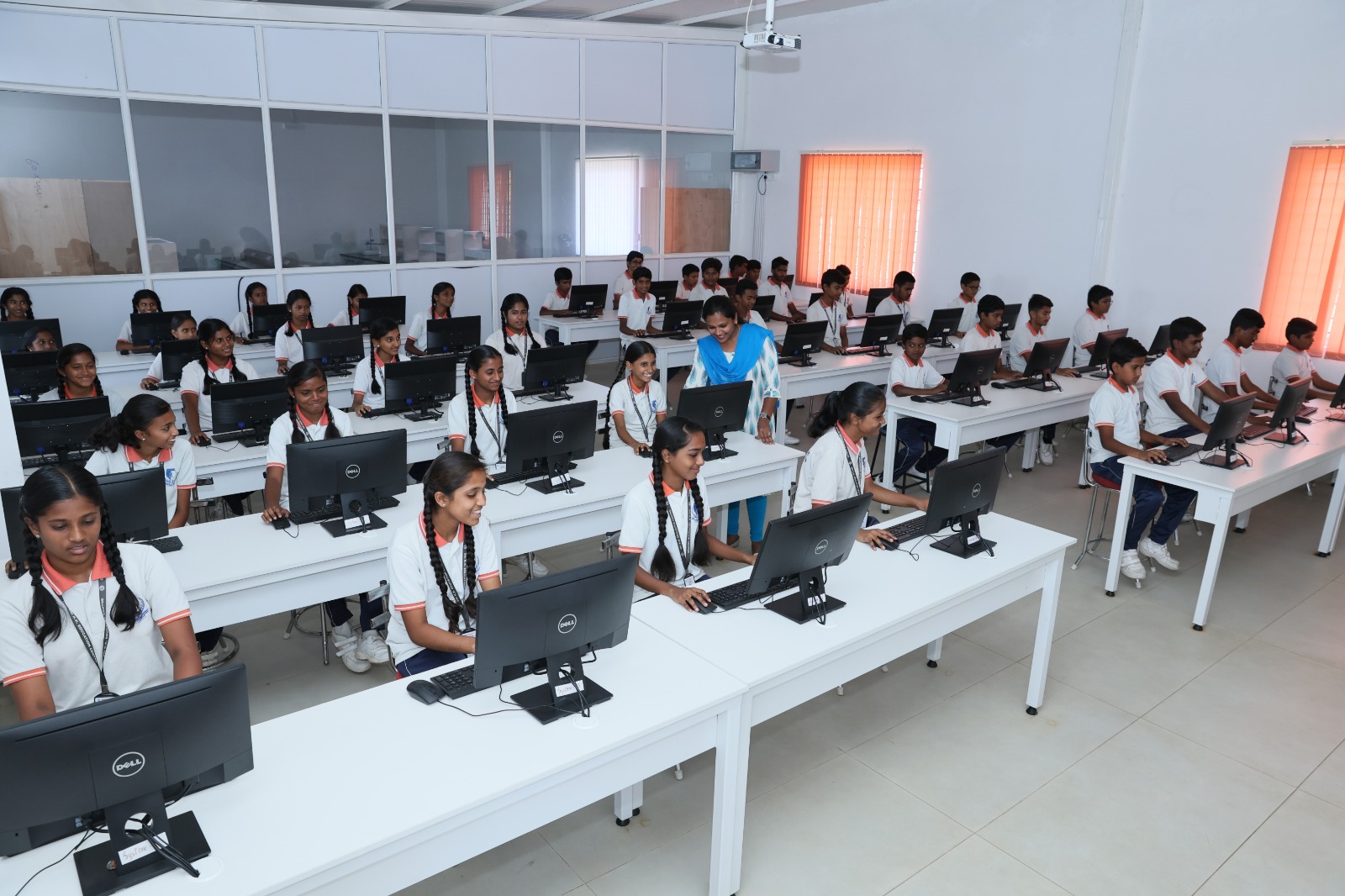
- Digital Literacy: Developing responsible and purposeful use of technology to support research, learning and communication.
- Independent Learning: Encouraging note-making, reflection, organisation, self-assessment and personal responsibility.
- Holistic Development: Integrating life skills, physical education, creative expression and values into the learning experience.
Teachers use a variety of strategies, including discussions, demonstrations, graphic organisers, flowcharts, concept maps, role-play, debates, interviews, presentations and project-based activities. These approaches make learning interactive and help students develop the skills needed to approach unfamiliar challenges with confidence.
Languages
Communicating with Confidence. Connecting Through Language.
Language learning plays a vital role in developing communication, cultural understanding and academic proficiency. English is the medium of instruction at Sri KK Education Centre, while students learn the languages offered by the school according to its language policy.
The language programme develops four essential skills: listening, speaking, reading and writing. Students engage in activities that strengthen vocabulary, grammar, comprehension, pronunciation and written expression.
Kannada receives appropriate emphasis in accordance with the school’s language policy and applicable Karnataka requirements. Students who need additional assistance are supported through suitable learning activities that help them strengthen their understanding and use of the language.
Interactive Language Experiences
Language learning is enriched through:
- Reading comprehension and guided reading.
- Recitation, storytelling and declamation.
- Debates, speeches and group discussions.
- Role-play, dialogue writing and interviews.
- Creative writing, diary entries and descriptive writing.
- Book reviews, poster making and notice writing.
- Language games, quizzes and crossword puzzles.
- Individual and collaborative projects.
These experiences help students communicate effectively in different situations, appreciate literary and cultural traditions, and express their ideas with clarity, confidence and sensitivity.
Assessment
Communicating with Confidence. Connecting Through Language.
Language learning plays a vital role in developing communication, cultural understanding and academic proficiency. English is the medium of instruction at Sri KK Education Centre, while students learn the languages offered by the school according to its language policy.
The language programme develops four essential skills: listening, speaking, reading and writing. Students engage in activities that strengthen vocabulary, grammar, comprehension, pronunciation and written expression.
Kannada receives appropriate emphasis in accordance with the school’s language policy and applicable Karnataka requirements. Students who need additional assistance are supported through suitable learning activities that help them strengthen their understanding and use of the language.
Interactive Language Experiences
Language learning is enriched through:
- Reading comprehension and guided reading.
- Recitation, storytelling and declamation.
- Debates, speeches and group discussions.
- Role-play, dialogue writing and interviews.
- Creative writing, diary entries and descriptive writing.
- Book reviews, poster making and notice writing.
- Language games, quizzes and crossword puzzles.
- Individual and collaborative projects.
These experiences help students communicate effectively in different situations, appreciate literary and cultural traditions, and express their ideas with clarity, confidence and sensitivity.
Learning Avenue's
Exploring Ideas Beyond Textbooks
Library
The school library encourages students to develop a strong reading habit, explore new ideas and pursue independent learning. A varied collection of age-appropriate books and reference materials can introduce learners to literature, science, mathematics, history, geography, biographies, general knowledge and other areas of interest.
Dictionaries, encyclopaedias, newspapers, magazines and educational periodicals further support research and information literacy. Library periods and reading activities encourage students to explore different genres, broaden their vocabulary and develop the ability to locate, interpret and evaluate information.
Book fairs and other reading initiatives, where organised, provide additional opportunities for students to discover authors and develop a lifelong appreciation of reading.
Mathematics Laboratory
The Mathematics Laboratory supports conceptual understanding through hands-on activities, mathematical models, puzzles, games and practical investigations.
Students explore mathematical relationships, visualise abstract concepts and connect mathematical ideas with everyday situations. These experiences strengthen logical reasoning, analytical thinking, accuracy and problem-solving while encouraging confidence in learning Mathematics.
Science Laboratory and Experiential Science
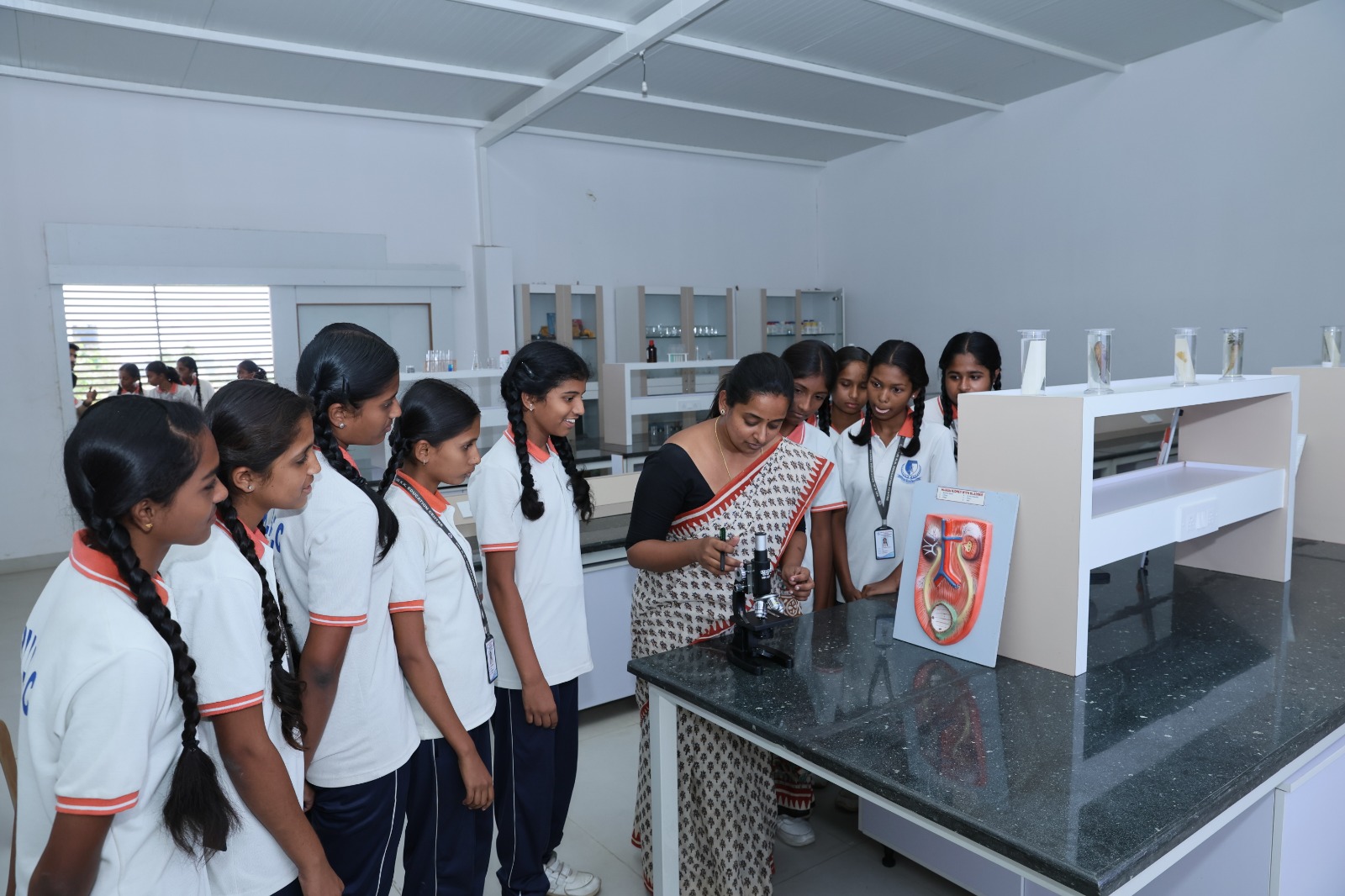
Science learning becomes more meaningful when students can observe, investigate and test ideas. Through suitable experiments, demonstrations, practical activities and project work, students develop a deeper understanding of scientific principles.
Observations of plants, the school environment and natural phenomena help connect textbook learning with real-world experiences. Students are encouraged to formulate questions, record observations, interpret findings and develop scientific temper.
All practical activities are conducted with age-appropriate equipment and appropriate safety procedures.
Life Skills Education
Life skills education helps students develop the personal and interpersonal abilities needed to navigate everyday situations responsibly. Through discussions, role-play, collaborative tasks and reflective activities, students explore self-awareness, communication, empathy, decision-making, problem-solving and managing emotions.
These experiences encourage resilience, healthy relationships, responsible choices and greater confidence in facing challenges.
Film-Based and Values Education
Age-appropriate films, stories and guided activities can provide engaging ways to explore values and life situations. Follow-up discussions, reflective writing and practical tasks encourage students to think about respect, responsibility, empathy, family relationships and the consequences of their choices.
The emphasis is on helping students understand values and apply them in everyday life rather than simply memorising moral lessons.
Information and Communication Technology (ICT)
Technology-supported learning helps students develop digital literacy, research skills and confidence in using digital tools. Through curriculum-related activities, students learn to organise information, communicate ideas, collaborate on tasks and explore solutions to problems.
Digital learning is integrated meaningfully with subject teaching, with appropriate attention to online safety, responsible technology use, information evaluation and digital citizenship.
Financial Literacy
Age-appropriate financial literacy activities introduce students to practical concepts such as budgeting, saving, spending wisely, distinguishing needs from wants and understanding the role of money in everyday life.
Through examples, simulations and problem-solving tasks, students begin to develop financial awareness, informed decision-making and responsible attitudes towards resources.
Global Awareness
Global awareness activities encourage students to understand current affairs, scientific developments, cultural diversity and issues affecting communities around the world.
Reading materials, discussions, presentations and research tasks help students develop curiosity, broaden their perspectives and learn to evaluate information thoughtfully. These experiences also encourage responsible citizenship and an appreciation of local and global interconnections.
Mathematics Enrichment and Adaptive Learning
Digital mathematics resources, where available, can provide personalised practice based on students’ learning needs. Interactive questions and progress feedback help learners strengthen conceptual clarity, improve procedural fluency and work at an appropriate pace.
Teachers can use learning insights to identify difficulties, plan additional support and provide opportunities for further practice or extension.
Environmental Awareness and Sustainability
Environmental learning encourages students to observe their surroundings, understand ecological relationships and recognise their responsibility towards the planet.
Activities such as nature observation, waste reduction, creative reuse of materials, mindful consumption, gardening and sustainability projects help students connect environmental concepts with everyday choices.
Through discussion, practical participation and reflection, students learn that sustainable living begins with informed and responsible action.
Enrichment Activities
WELL-BEING AND PHYSICAL DEVELOPMENT
Yoga and Mindfulness
Yoga and mindfulness provide opportunities for students to develop body awareness, concentration and emotional balance. Age-appropriate yoga postures, breathing exercises, stretching and relaxation activities encourage flexibility, balance and self-awareness.
These practices can also help students recognise stress, pause before reacting and develop healthy habits that support their overall well-being.
Physical Education and Games
Physical education supports students’ physical fitness, coordination, teamwork and social development. Structured activities help improve endurance, speed, strength, agility and flexibility while encouraging regular participation in physical activity.
Depending on the school’s facilities and activity schedule, students may participate in sports such as basketball, football, volleyball, throwball, cricket, athletics, table tennis and traditional games. Indoor games such as chess and carrom can complement outdoor activities by encouraging strategy, concentration and sportsmanship.
Through physical education, students learn to cooperate, follow rules, respect opponents and value participation as much as achievement.
After-School Sports Coaching
Where offered, optional after-school sports programmes provide additional opportunities for students to develop specific sporting skills. Guided by qualified physical education teachers or coaches, students can build technique, discipline, teamwork and confidence while preparing for school-level competitions.
CREATIVITY AND EXPRESSION
Literary and Cultural Events
Literary and cultural events provide students with opportunities to showcase their abilities in public speaking, creative writing, recitation, music, dance, drama and other forms of expression.
Individual and group activities nurture communication, imagination, collaboration and confidence. Recognition of students’ efforts encourages participation, perseverance and appreciation of different talents.
Special Assemblies
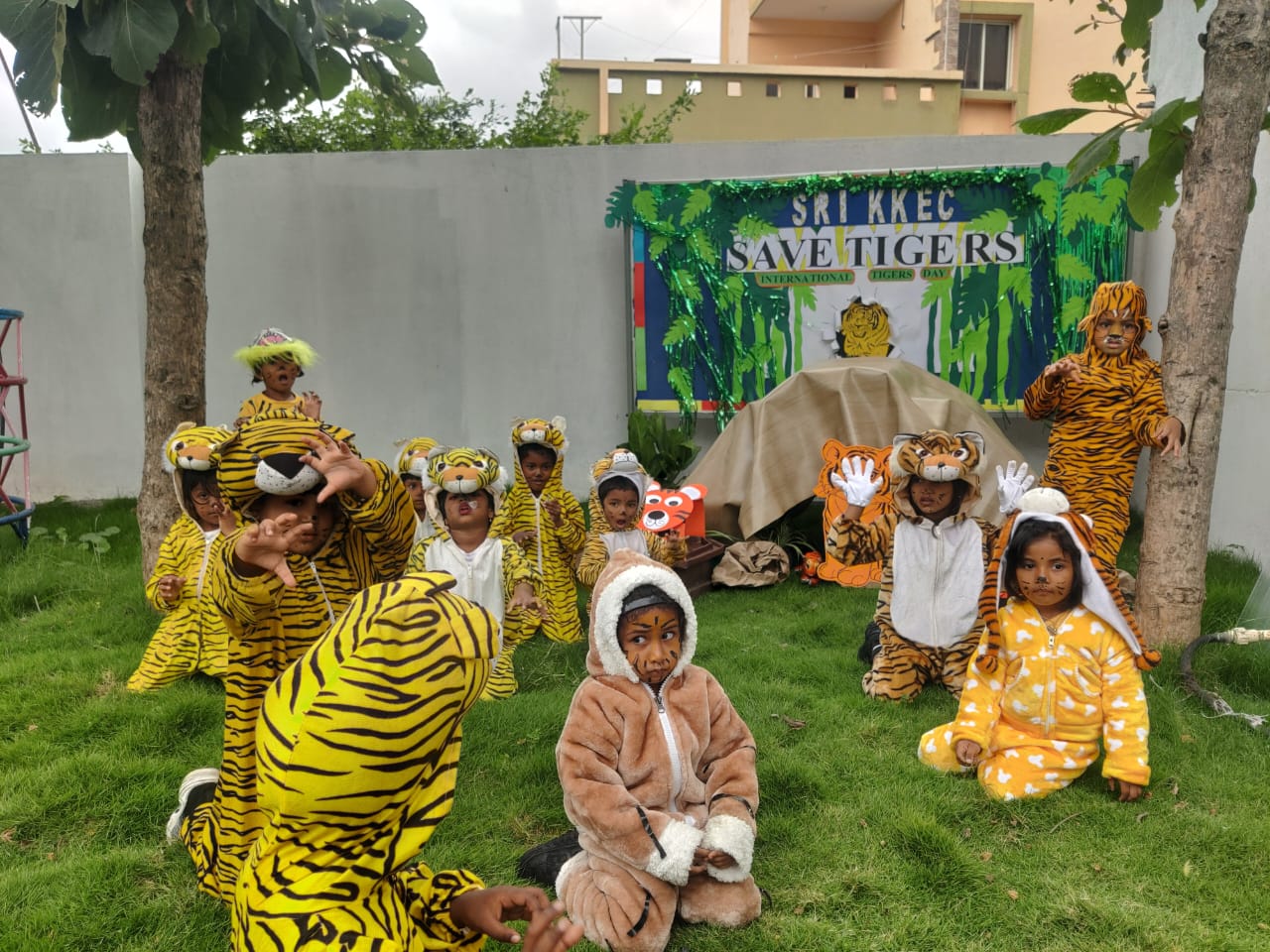
Special assemblies mark national days, cultural celebrations and events of educational or social significance. Students may participate through speeches, skits, mime, songs, dances and presentations.
These experiences help develop public-speaking skills, teamwork, cultural awareness, civic responsibility and respect for India’s diverse traditions.
Bulletin Boards and Display Projects
Theme-based bulletin boards and classroom displays provide opportunities for students to connect learning with visual communication and creative design. Working individually or in groups, students research topics, organise information and present ideas through illustrations, charts, photographs and written content.
These activities encourage collaboration, ownership of learning and the practical application of subject knowledge.
School Day and Performances
School celebrations and performances provide platforms for students to showcase their talents through music, dance, theatre, speeches and other presentations. Collaborative preparation develops discipline, coordination, confidence and a sense of belonging to the school community.
Student Artwork and Notebook Cover Design
Theme-based art activities invite students to express their creativity through drawing, painting, collage and other visual media. Selected student artwork may be showcased on school displays, publications or stationery, where such initiatives are organised.
Recognition of student contributions encourages artistic exploration, originality and pride in their work.
School Magazine
The school magazine provides a platform for students to share original writing, poetry, artwork, photography and other creative contributions. Participation in editorial, design and publication activities, where available, develops communication, organisation, teamwork and leadership.
The magazine also documents significant school activities and celebrates the achievements and creativity of the school community.
School Band and Music
Music education nurtures rhythm, listening, coordination and creative expression. Where the school band is offered, students can learn age-appropriate instruments and develop musical skills through regular practice and group performance.
Participation in musical ensembles encourages discipline, teamwork and an appreciation of music as a shared art form.
SUSTAINABILITY AND SOCIAL RESPONSIBILITY
Waste Segregation
Students are encouraged to reduce waste, segregate materials appropriately and adopt environmentally responsible habits. Clearly labelled bins and guided campus practices can help learners understand waste management and the importance of resource conservation.
Where composting facilities are available, biodegradable waste can be converted into compost for gardens. Such initiatives connect environmental learning with practical action.
Reducing Food Waste
Food-waste awareness activities help students understand the value of food and the environmental impact of waste. Campaigns, posters, assemblies and student-led initiatives can encourage thoughtful portions, responsible consumption and respect for the resources involved in food production.
Community Service and Donation Drives
Donation drives provide opportunities for students and families to contribute suitable books, stationery, uniforms and other useful items for reuse by those who need them.
Such initiatives encourage generosity, empathy, responsible consumption and an understanding of how small actions can make a positive difference in the community.
EXPLORATORY LEARNING
Outdoor and Experiential Programmes
Supervised outdoor learning experiences allow students to explore unfamiliar environments, work collaboratively and develop greater independence. Depending on the programme, students may engage in nature-based activities, group challenges, environmental observation and guided reflection.
These experiences can strengthen adaptability, self-confidence, teamwork, responsibility and respect for the natural world.
Educational Field Trips
Field trips complement classroom learning by allowing students to explore places of scientific, historical, cultural, artistic and environmental significance.
Visits to educational institutions, museums, galleries, planetariums, nature centres and other suitable destinations help students connect academic concepts with real-life experiences. Pre-visit preparation and post-visit discussions further strengthen observation, research, communication and reflection.
LEARNING BEYOND THE CLASSROOM
Art Education
Art education supports creativity, visual awareness, critical thinking and self-expression. Students can explore a range of artistic approaches, materials and techniques through guided projects and independent experimentation.
Possible areas of exploration include contemporary art, folk art, traditional Indian art forms, drawing, painting, perspective, abstract art, mosaic work and outdoor sketching, depending on the school’s programme.
Art activities also encourage patience, attention to detail, cultural appreciation and confidence in expressing individual ideas.
Music Education
Music provides students with opportunities to explore rhythm, melody, listening and performance. Through vocal music, instrumental practice and group activities, students develop musical awareness, coordination, confidence and appreciation for different musical traditions.
Where external music educators or specialist partnerships are part of the school’s programme, these experiences can further enrich students’ exposure to music.
Hobby and Interest-Based Activities
Hobby activities give students opportunities to discover interests beyond the regular academic curriculum. Depending on the activities offered, these may include art, craft, theatre, dance, music, model-making or other creative and practical pursuits.
Such experiences encourage exploration, perseverance, self-expression and the discovery of individual strengths.
External and Enrichment Assessments
Appropriate academic challenges can help students identify their strengths, practise applying concepts and develop confidence in unfamiliar problem-solving situations.
Where offered, subject-based competitions, Olympiads and diagnostic assessments provide additional opportunities to explore concepts beyond routine classroom exercises. Results and feedback can help students and teachers identify areas for improvement and plan further learning.
Participation should encourage curiosity, personal growth and healthy competition, with emphasis on learning rather than comparison alone.
Support
Additional Learning Support
Sri KK Education Centre aims to create an inclusive learning environment in which students with different abilities and learning needs are treated with dignity and supported appropriately.
Teachers monitor students’ progress and identify areas where additional assistance may be beneficial. Depending on individual needs and available school resources, support may include targeted practice, differentiated teaching strategies, small-group assistance, individual guidance and collaboration with parents.
Where specialist support is required, appropriate consultation and referral can help families understand the options available for their child.
Counselling and Emotional Well-Being
Counselling and student guidance can provide a supportive space for learners to discuss academic, social, personal or emotional concerns. Depending on the school’s arrangements, students may seek support directly or be referred by teachers, with parent involvement where appropriate.
Age-appropriate individual or group sessions can address communication, relationships, self-awareness, adaptability, stress management and responsible decision-making.
The aim is to help students develop healthy coping strategies, seek help when needed and build the confidence to navigate the challenges of adolescence.
Parent–Teacher Partnership
Parents and teachers share an important responsibility in supporting each student’s development. Regular parent–teacher meetings provide opportunities to discuss academic progress, learning habits, achievements and areas requiring further attention.
Open communication enables parents and teachers to work together, reinforce positive learning habits and identify appropriate ways to address difficulties. This partnership supports a consistent and encouraging environment for each learner.
Preparing for the Secondary Stage
At Sri KK Education Centre, the Middle School years are an opportunity for students to deepen their knowledge, discover their interests and develop the skills needed for the future.
Through a balanced blend of academic learning, practical exploration, technology, creativity, physical education, life skills and student support, we strive to nurture thoughtful, confident and responsible young people.
Guided by the principles of NEP 2020 and the educational framework of CBSE, our aim is to help every learner progress towards the Secondary Stage with curiosity, competence, resilience and a strong foundation of values.